
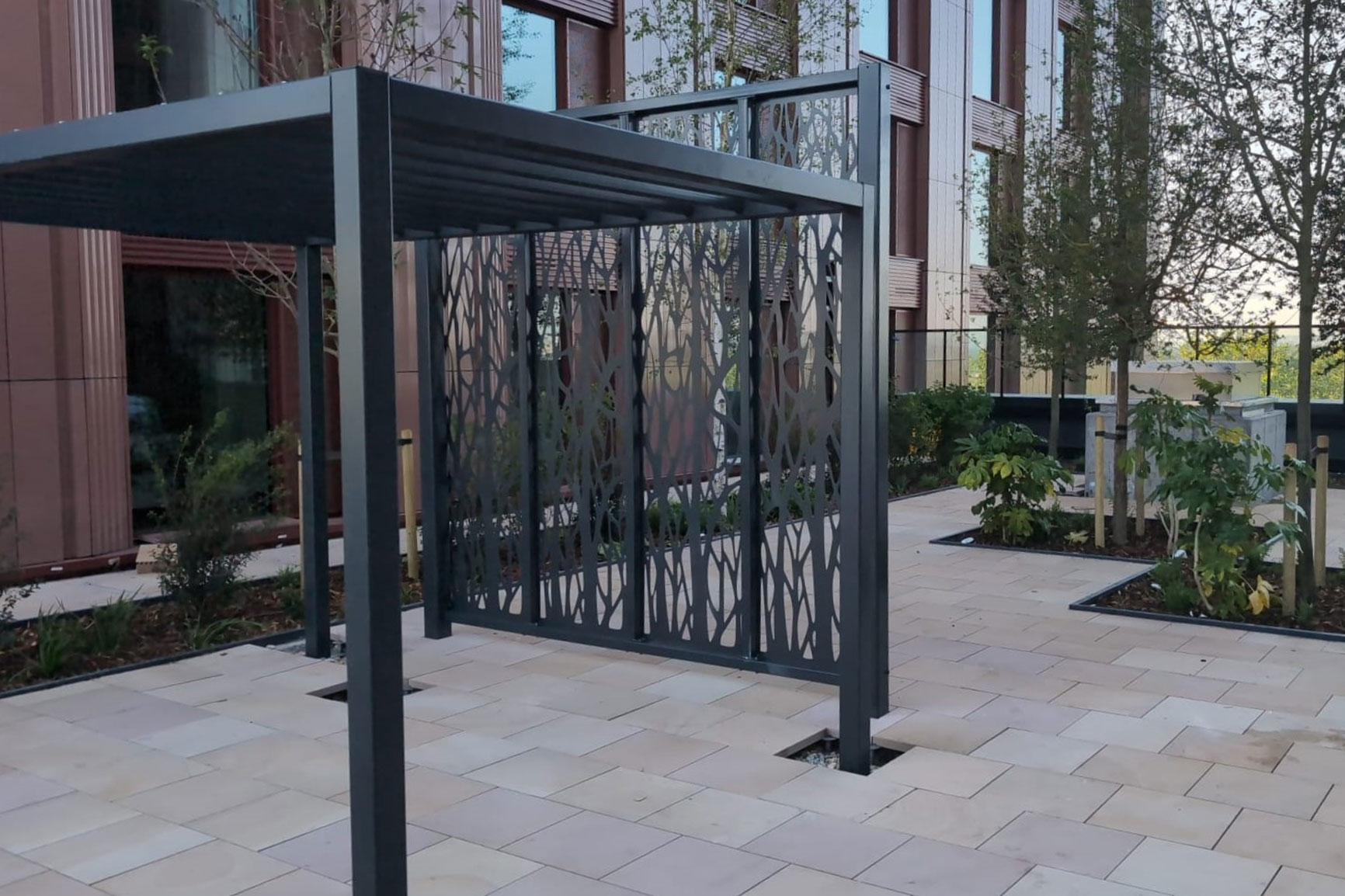
How Shading Structures Reduce Microclimate Temperatures
It’s no secret that the climate is changing, periods of cold weather and hot weather alike are becoming increasingly severe, even in moderate climates like the UK. We’re seeing many more sweltering summers with sticky heat depleting energy levels and increasing the likelihood of heat related illnesses. As we march on with our expansion of the concrete jungle leaving the greenery and natural cover behind, we’re exacerbating the impact that the sun has on our local surroundings with concrete and tarmac surfaces actively upping the temperature and compounding the issue.
On hot summer days the air temperature can reach around 35 degrees and as a direct result exposed concrete can reach 55 degrees while tarmac can exceed 65 degrees. In sharp contrast a nearby shaded area can be sitting at temperatures that 15-25 degrees cooler.
That’s a significant difference that highlights just how powerful shading structures can be in reducing microclimate temperatures.
Many cities are feeling the effects of climate change and the urban heat island effect and locally managing those temperatures has become essential. Shading structures are a low cost, low energy, and immediate solution that’s available to reduce heat stress in the outdoor environment.
Why Microclimate Matters
A microclimate is a small area or restricted space that has a climate that differs from that of the surrounding area. This could be a courtyard, town centre, courtyard or even an alleyway. The temperatures these locations experience can be higher due to the result of:
- A lack of vegetation and greenery
- The presence of dark, heat-absorbing materials
- Low winds due to being enclosed or lower down
- Increased solar exposure
Microclimates exist everywhere in cities as unintended consequences of the landscape that we’ve built. In combination with each other these urban heat islands (UHI) can increase city temperatures by 3-7 degrees compared to nearby rural areas. At pedestrian level, surface temperatures can hit temperatures 20-30 degrees hotter than ambient air.
These temperatures matter because our comfort as humans is affected by more than just the temperature of the air, the mean radiant temperature (MRT) plays a huge role in radiating heat from the surfaces directly into the atmosphere. With an air temperature of 32 degrees and a pavement sitting at over 60 degrees radiating heat upward, it’s enough to make facing the day unbearable.
Shading structures are a direct way to address the radiant heat load.
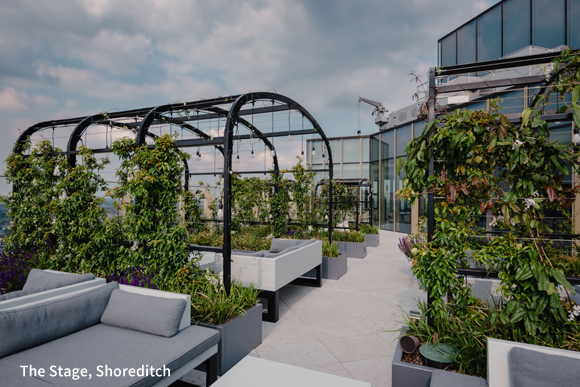
How Shading Structures Reduce Temperature
Blocking Direct Solar Radiation
The main driver of extreme surface temperatures is shortwave solar radiation. When sunlight hits the pavement, roofing, or metal, most of that energy is absorbed and then converted into heat.
Shade structures act as a literal barrier preventing the sunlight from being absorbed by those surfaces that can radiate that heat directly into the public. This dramatically lowers surface temperatures and reduces the radiant heat exposure.
Lowering the Surface Temperature
Surface temperatures are a vital measure of the microclimate because it’s one of those primary radiators of heat reflecting it back into the atmosphere.
- Sun-exposed Asphalt – 60-70 degrees vs Shaded Asphalt – 35-45 degrees
- Sun-exposed Concrete – 50-60 degrees vs Shaded Concrete – 30-40 degrees
Through reducing surface temperatures using shading structures helps prevent the secondary heating of the surrounding air.
Improving Thermal Comfort
As a result of reducing radiant exposure thermal comfort is massively improved and perceived temperatures drop by between 5 and 15 degrees. We also see a large reduction in the risk of heat stress or heat stroke and outdoor spaces become usable for much longer periods of time.
On a day with a high of 34 degrees, in the sun it may feel much closer to 45 degrees but under shade that same space will feel much closer to the actual air temperature. These changes go a long way to ensuring public centres and plazas stay busy and bustling rather than abandoned in times of high temperatures.
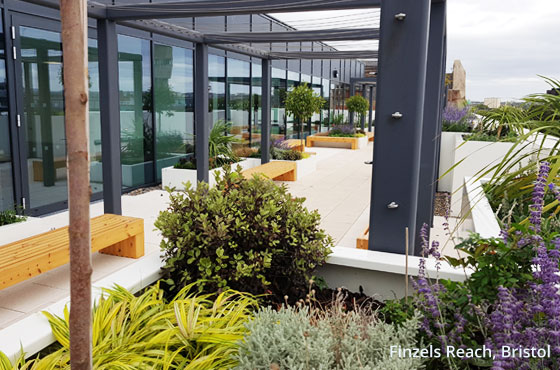
Types of Shading Structures
There are two primary shading structure categories, and these are built and vegetative.
Vegetative Shade
Vegetative shade is natural organic cover such as trees, large bushes or hedgerows and it’s one of the most effective long-term cooling solutions.
The benefits of vegetative shade:
- Canopy shade directly blocks solar radiation
- Evapotranspiration cools the surrounding air
- Significantly reduced surface temperature beneath the canopy by as much as 20-30 degrees compared to exposed pavement
There are, however, some drawbacks such as:
- The trees take time to mature
- There needs to be adequate soil volume that for the trees and that can be tricky in public centres
- Significant investment in irrigation and maintenance is needed
- Seasonal variance may affect the level of shading
Built Shading Structures
Built shading structures provide immediately available shade in a predictable manner.
Examples of built shading structures:
- Pergolas
- Trellises
- Tensile fabric canopies
- Covered walkways
- Parking canopies
- Solar photovoltaic (PV) shade structures
Temporary or Flexible Shade
In some situations, it can be preferable to opt for seasonal or flexible solutions, particularly in colder months where the solar heat is wanted.
Examples of temporary and flexible shade structures:
- Retractable awnings
- Temporary event structures
- Shade umbrellas
- Modular fabric installations
These mobile and adaptable solutions can be modified based on the sun angles and patterns.
Consideration in Design for Maximum Cooling Impact
To get the most out of any shading structure its implementation needs to be planned thoughtfully.
Orientation and Solar Path
It’s important to understand sun angles for effective cooling at different points in the day and during the various seasons.
In the summer the sun is higher in the sky making horizontal shading much more effective. In the morning and late afternoons, as the sun lowers, the lower angle of the sun can bypass overhead shade, and this may call for vertical or angled structures. It’s an effective strategy to plan around peak heat hours, primarily between 10:00 and 16:00 as this provides the largest cooling benefit.
Material Selection
The material chosen for the shading structure is vitally important as this heavily impacts how effective the structure is at reducing the surface temperature.
Key factors include:
Solar Reflectance – High-albedo materials reflect greater amounts of sunlight and reduces heat absorption and subsequent radiation.
Thermal Mass – Materials like steel and concrete can store heat and radiate back towards the ground if it’s not adequately ventilated.
Permeability – Tensioned or perforated fabric structures and canopies can allow airflow which prevents hot air from being trapped under the canopy. Add in UV-resistant fabric and that creates strong solar blocking potential without the heat retention.
Height and Airflow
An important aspect to planning a shade structure is the height and subsequent airflow around the structure. Lower enclosed structures ten to trap hot air and can elevate temperatures further. The aim is to encourage cross ventilation with elevated or open sided structures, as in warmer climates the circulation of air is just as important as the shade itself.
Strategising Coverage
It may not always be possible to cover an entire area in shade and it’s not always desirable either. Strategically placing shade structures can have a large impact on the local temperature, particularly when focused around communal areas.
Locations that should be targeted for shading:
- Seating areas
- Pedestrian paths
- Playground equipment
- Building entrances
Covering these locations with shade can have a dramatic impact without total area coverage. It’s suggested that around 40-60% coverage of a hardscaped area provides the optimum impact in reducing local heat intensity.
Measuring the Impact
There are multiple metrics that we can use to measure the impact if shading structures in an area but we’re primarily looking for surface temperature and air temperature reductions.
With the effective use of shading structures, these are some typical temperature reductions that can be expected:
- 15-30 degrees for paving surface temperatures
- 20-35 degrees for playground surface temperatures
- 1-3 degrees air temperature reduction especially when combined with vegetation
Although a 1–3-degree reduction in air temperature doesn’t seem significant, it affects comfort and reduces the risk of heat related illnesses significantly.
Saving Energy
Through including shading structures adjacent to buildings, solar heat gain can be heavily reduced, and this can result in:
- Lower demand on indoor cooling
- Reduced energy demand at peak times
- Passively improves comfort for all those in the building
- Reduced solar heat gain through windows by up to 65-80%
Public Health and Habitability
A great consequence of lowering localised temperatures is a large reduction in heat related illnesses such as heat stroke, sun burn, dehydration and other resulting health problems.
Surface temperature is commonly overlooked as a cause of health-related illnesses, by lowering them we also lower:
- Burn risks as surfaces above 60 degrees can cause a burn within seconds
- Heat exhaustion risk
- Dehydration risk
The net benefits are that we see increased activity outdoors with public spaces becoming more habitable in warmer months. This leads to increased spending in retail districts, increased social interaction and exercise. Heat mitigation is fast becoming both a viable public health and economic strategy.
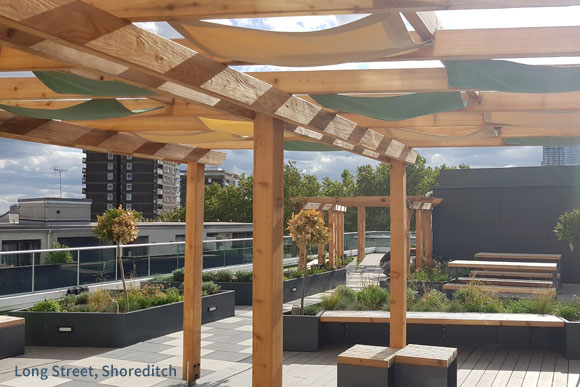
Different Settings Different Applications
Urban Streetscapes
Key areas for shading in urban streetscapes are areas where we see people resting, waiting or sitting down. This could be over benches and picnic tables, bus stops or any communal areas where people collect. In addition, pedestrian corridors and paths are also great candidates for shading structures to lower the localised temperature and improve comfort.
Commercial Locations
One of the largest generators of heat are car parks, large open areas covered in tarmac and even when filled with cars, the temperatures can reach 65-70 degrees in full sunlight. A great way of reducing the temperature is to use canopies to cover vehicles and bicycle parking spaces to reduce the surface temperature up to 20 degrees. Solar panels can be added to the canopies to turn that sunlight into green energy which can be cycled back into the grid or used to charge Plug-In-Hybrids and EV’s.
By including these canopies over the car park, it can reduce the local and surface temperatures making the heat more bearable for visitors entering and exiting the premises.
Schools and Playgrounds
Play areas are a magnet for direct sunlight with all the various surfaces used that are designed to soak up energy from falls, also soaking up heat from the sun. They can exceed 70 degrees on a hot day, which are a particular hazard for children that come into contact with the ground regularly. These high temperature surfaces can cause some nasty burns.
Sand pits, climbing frames, swings are all great places to apply shade. Anywhere where a child is going to encounter metal or where they have the potential to fall and touch the floor with their bare skin.
By applying shading strategically, surface temperatures can be lowered by between 20 and 35 degrees. This helps extend safe play hours, protects the children from UV exposure and again prevents the chance of burns to the skin.
Residential Developments
Residential developments follow the same pattern as the other locations, the aim is to cool down the courtyards, patios, and shared spaces through shading cover. This is all to aid thermal comfort through the use of things like tree canopy cover, pergolas or shade sails.
Common Mistakes to Avoid
The level of effectiveness of shading structures is highly dependent on research and preparation; there are multiple ways in which shading structures can potentially fail or provide inadequate coverage.
Commons mistakes include:
- Installing shade structures without studying and understanding seasonal solar paths
- Using dark materials that absorb heat
- Creating enclosed structures that trap heat
- Underestimating wind loads for tensile canopy structures
- Not integrating shade into the broader project or location design
A key component of adding shading structures to any location is having it work with a fully planned ventilation, landscaping and material strategy to ensure there are no bottlenecks for microclimate management.
A Broader Heat Mitigation Strategy
Shading can be combined with a whole host of complementary strategies including:
- Cooling or reflective pavement
- Green infrastructure i.e. green roof shelter, green canopies and pergola
- Expanding existing tree canopy cover
- Using permeable surfaces
- Water features
- Reflective roofing tiles and materials
With all these individual components working together it can help created a layered heat resilience strategy.
Cooler and More Liveable Spaces are the Aim
As the temperatures rise and we see more frequent heatwaves, shading structures are an immediate and practical method of heat management and relief. They can be immediately adopted to any climate adaption strategy because they are:
- Passive
- Energy-efficient
- Incredibly scalable
- Widely customisable
Whether this is achieved using a tree canopy, tensile fabric system, pergola, or shade sail, the reduction in surface temperatures and radiant heat exposure will all improve human comfort and liveability.
The difference between a 60-degree surface and 35-degree surface is literally whether it’s in the shade or not. Designing for shade is about more than comfort, it’s about adaptation, resilience and safety on an ever-warming planet.